

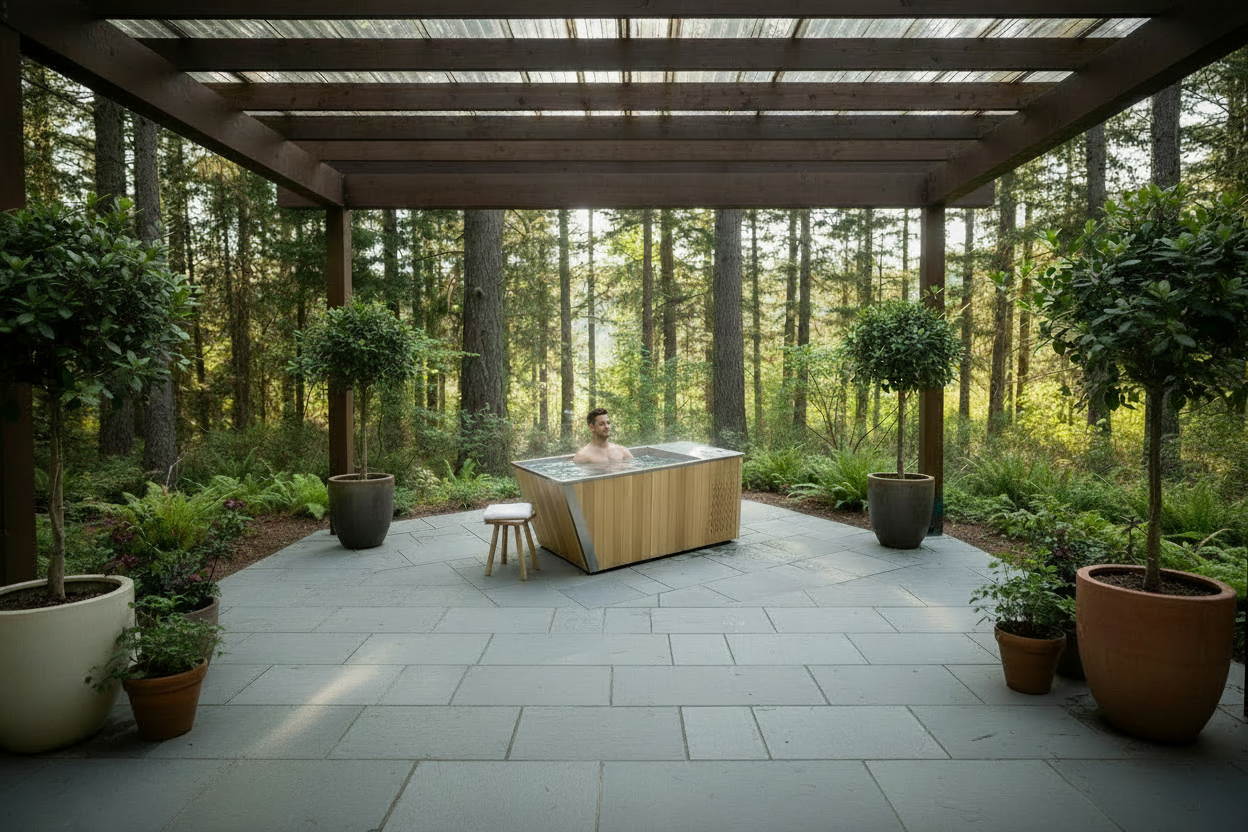
How does cold plunge therapy work? The Science Simplified
Cold plunge therapy—also known as cold water immersion (CWI)—has become one of the most popular recovery practices among athletes, wellness enthusiasts, and longevity-minded individuals. While plunging into cold water may seem like a modern trend, it has been used for centuries in cultures around the world. Today, scientific research is helping us understand how cold exposure affects the body and where it may offer meaningful benefits.
Studies suggest that cold water immersion can support exercise recovery, reduce muscle soreness, improve subjective feelings of well-being, and temporarily activate physiological pathways involved in the body's response to stress.
Cold plunge therapy isn't just about feeling refreshed—your body responds in measurable ways within seconds of entering cold water.
When you're immersed in cold water (typically 50–59°F or 10–15°C):
❄️ Blood vessels narrow (vasoconstriction) to help preserve your core body temperature.
🧠 Your nervous system is activated, increasing the release of norepinephrine, a hormone and neurotransmitter associated with alertness and focus.
💪 Muscle temperature drops, which can help reduce soreness and improve recovery after intense exercise. This is why many athletes use cold water immersion following competitions or demanding training sessions.
🔥 Brown fat is activated in some people, helping generate heat to maintain body temperature. Researchers are studying how this may affect metabolism, though cold plunges should not be viewed as a weight-loss treatment.
What does the research support?
Current evidence suggests cold water immersion can:
✔ Reduce delayed-onset muscle soreness (DOMS)
✔ Improve perceived recovery after strenuous exercise
✔ Increase alertness immediately after immersion
✔ Provide a controlled stress stimulus that may support resilience over time
For most healthy adults, 5–10 minutes in water between 50–59°F (10–15°C) is a commonly studied protocol. If you're new to cold plunges, start with shorter sessions and gradually build tolerance.
Sources:
-
Machado AF, et al. Sports Medicine. 2016.
-
Hohenauer E, et al. PLoS One. 2015.
-
Bleakley CM, Davison GW. British Journal of Sports Medicine. 2010.
#ScienceSimplified #ColdPlunge #ColdWaterTherapy #Recovery #Wellness #SportsScience #EliteWellnessCompany
%E2%80%94has%20become%20one%20of%20the%20most%20popular%20recovery%20practices%20among%20athletes,%20wellness%20enthusiasts,%20and%20longevity-minded%20individuals.%20While%20plun...)